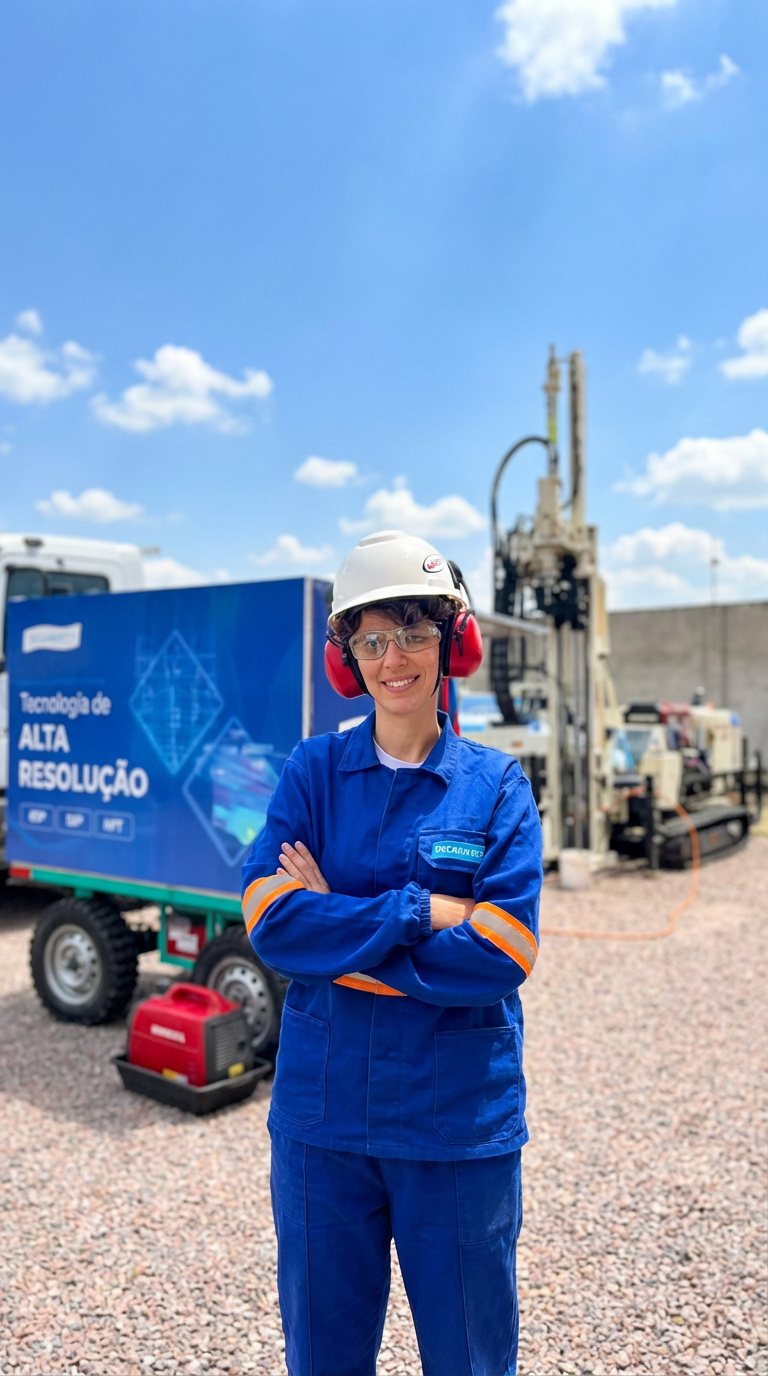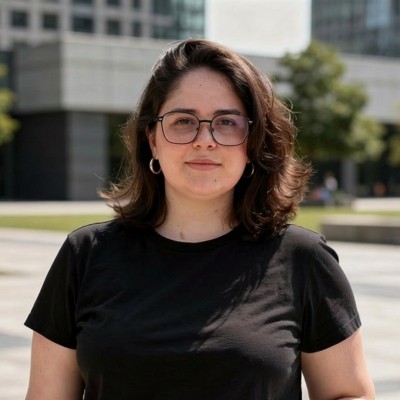
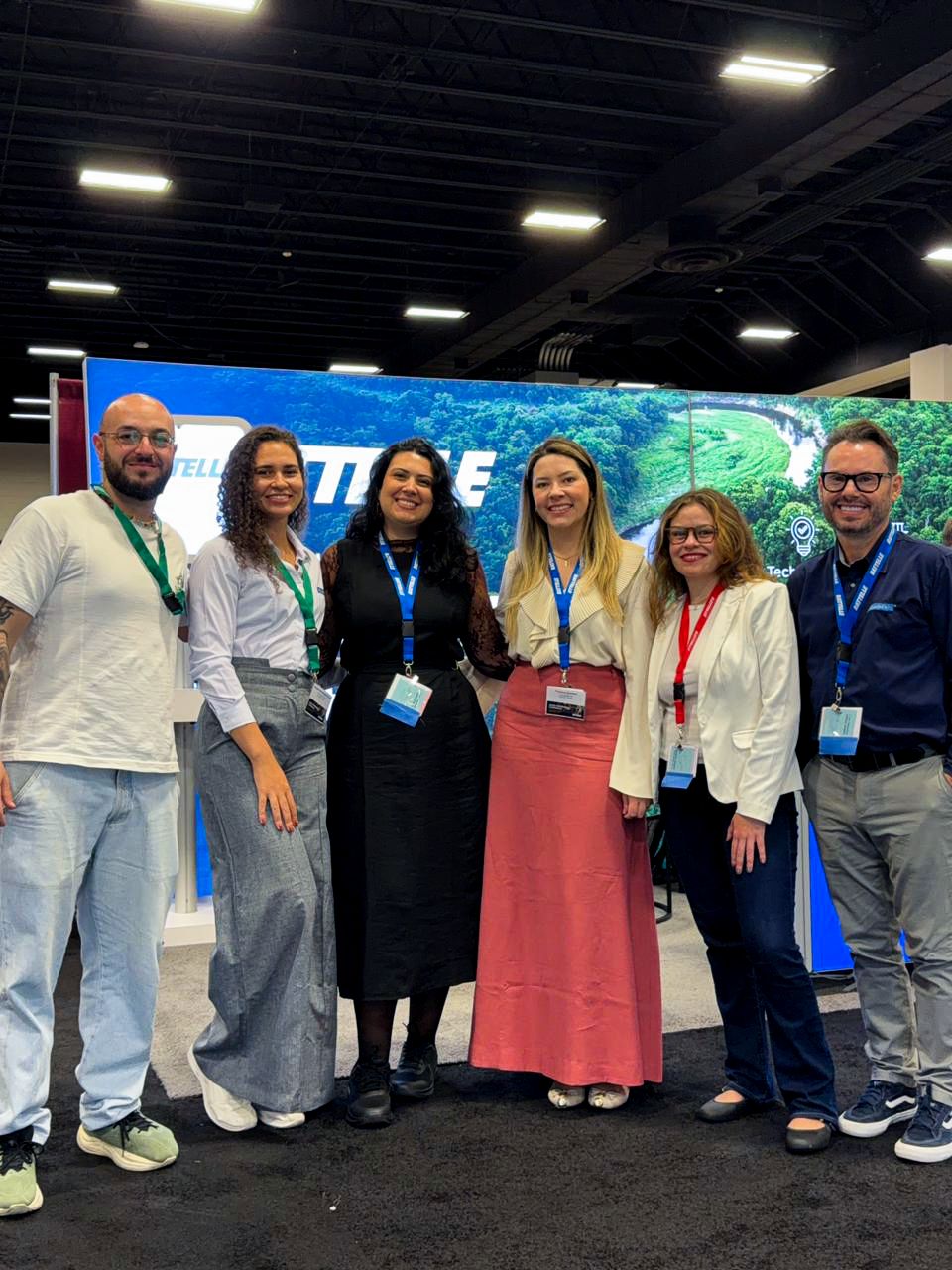
Geoambiente® took part in the Battelle 2026 Chlorinated Conference, the 14th International Conference on Remediation of Chlorinated and Recalcitrant Compounds, held from May 31 to June 4, 2026 at the Fort Worth Convention Center in Fort Worth, Texas, USA. As one of the world's most important technical gatherings dedicated to chlorinated compound remediation and contaminated site management, the event welcomed the company with four technical papers presented, reinforcing its commitment to research, innovation and the development of environmental solutions.
Bringing together specialists, researchers and companies from different countries, the conference is one of the leading international venues for exchanging knowledge on environmental remediation. For Geoambiente®, presenting four technical papers was a chance to show the world the strength of Brazilian innovation, sharing knowledge, experience and solutions for the challenges of environmental remediation.
Artificial Intelligence to Forecast the Evolution of Contamination Plumes
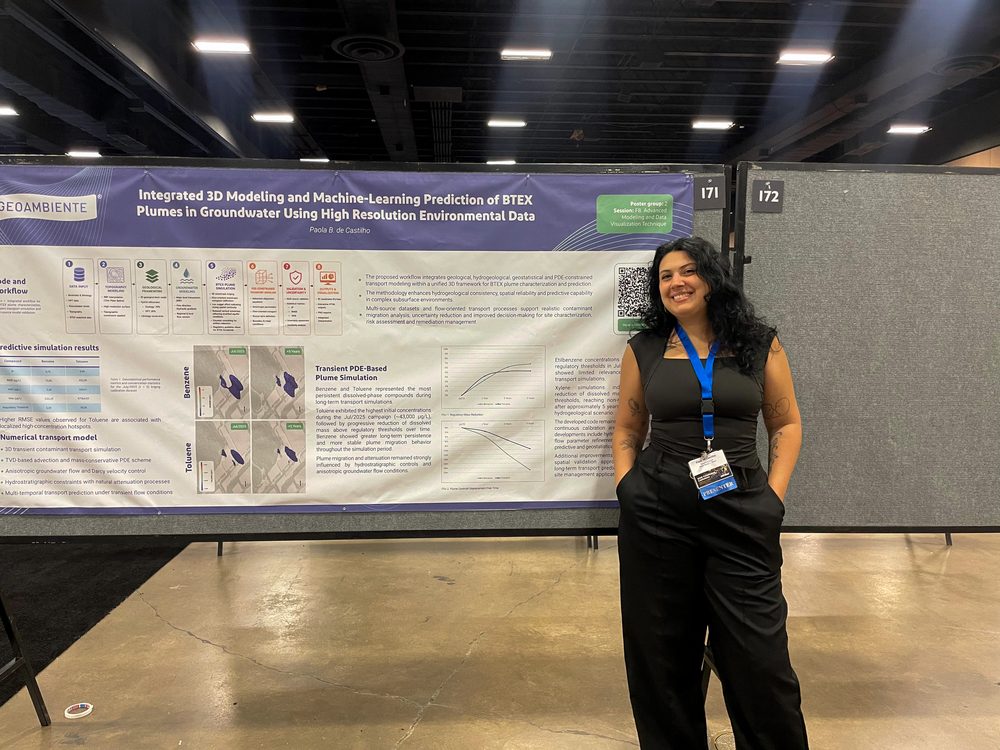
One of the papers, presented by geological modeler Paola de Castilho, proposed an integrated 3D modeling approach to forecast the evolution of BTEX (benzene, toluene, ethylbenzene and xylene) plumes in groundwater. The methodology combines three-dimensional geological modeling, high-resolution environmental data and numerical advection-dispersion simulation to estimate how contamination will behave over time, supporting safer decisions in contaminated site management.
A Brazilian Technology for a Long-Standing Mining Challenge
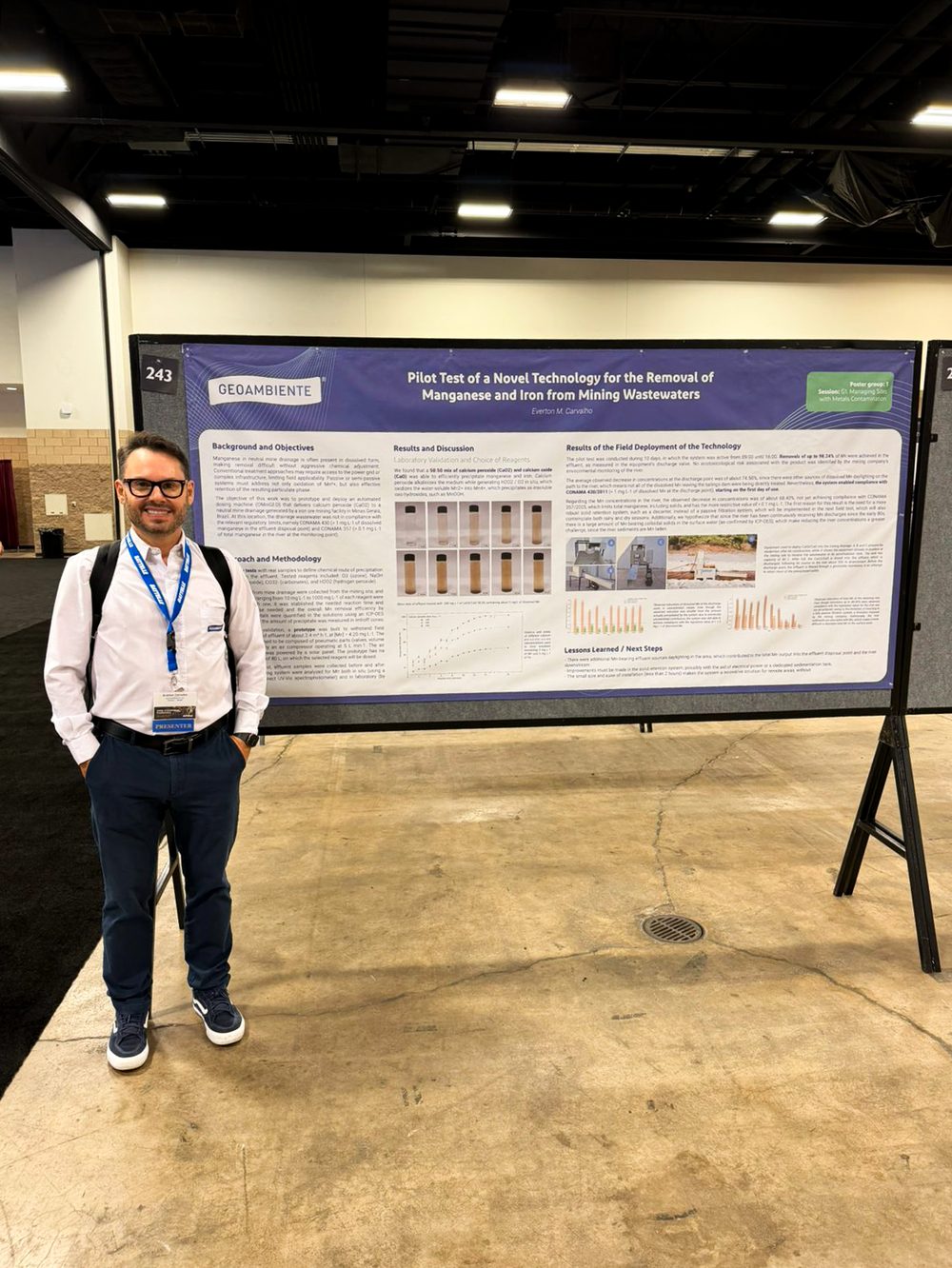
Everton Carvalho, founder and CEO of Geoambiente®, presented the results of a pilot test of OMniGEO®, the company's proprietary technology for removing manganese and iron from mining wastewater. Built on the integration of research, innovation and practical field application, this homegrown solution aims to strengthen water security and increase operational efficiency in the mining sector.
Finding What Stays Hidden Underground
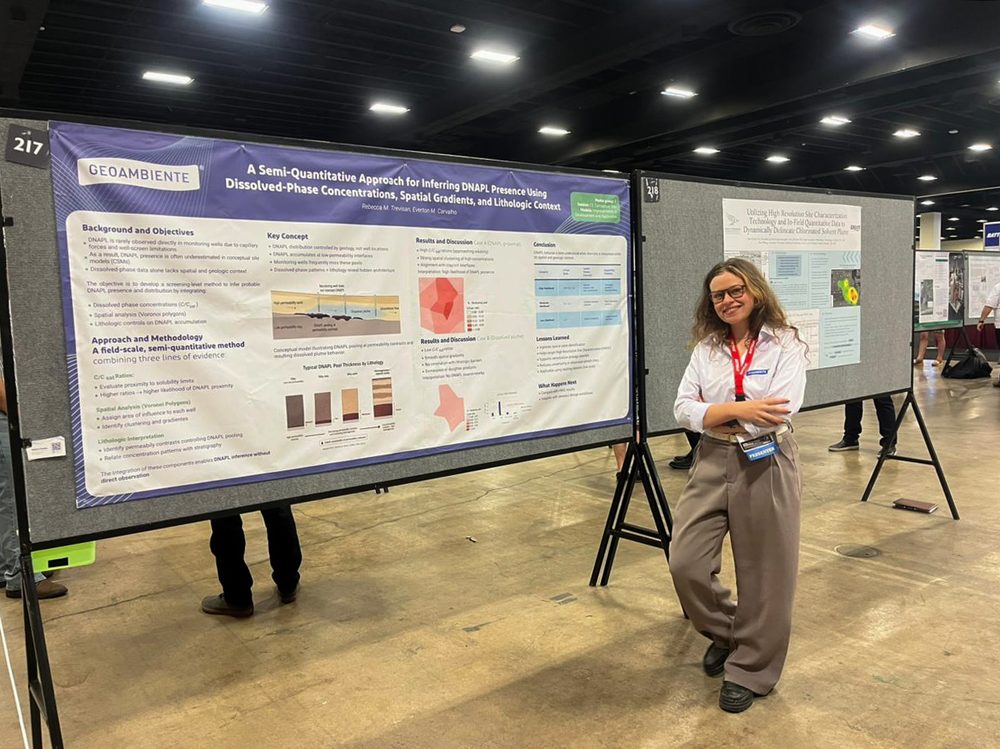
Chemical engineer Rebecca Trevisan presented a semiquantitative approach for inferring the presence of DNAPL (dense non-aqueous phase liquids), contaminants that can remain hidden underground for years with no visible signs. By integrating dissolved-phase concentration data, lithological context and spatial analysis, the methodology increases confidence in identifying areas with the greatest potential for source zones, making environmental investigations more precise.
Geostatistics That Turns Hypotheses into 3D Maps
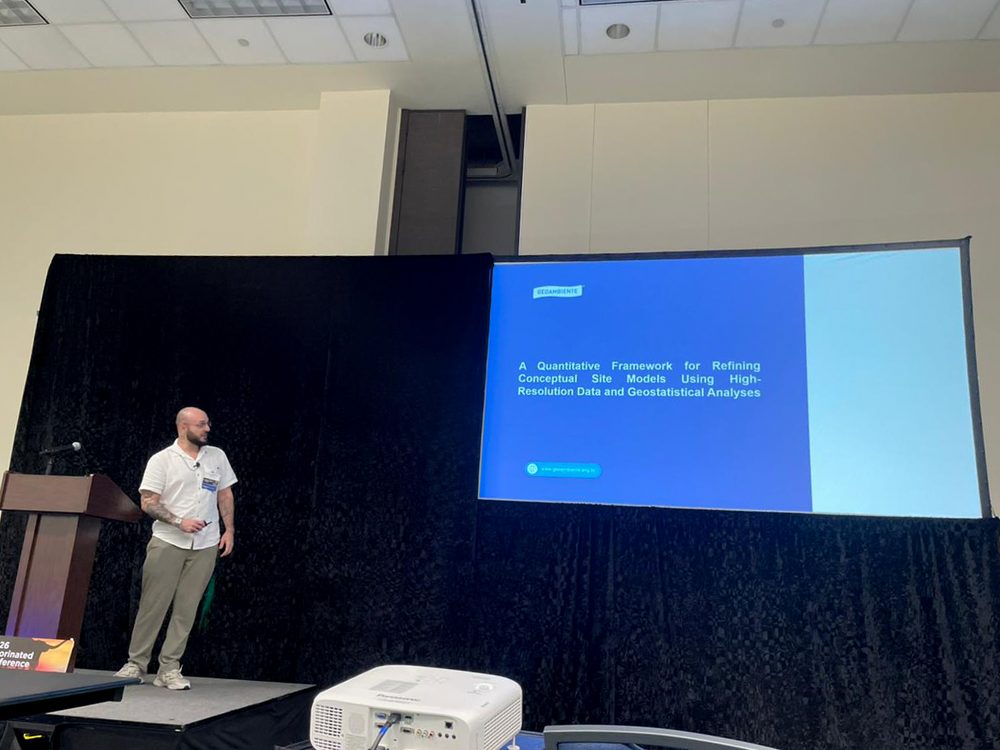
Rounding out the presentations, geological modeler Leonardo Martinez introduced a quantitative framework for refining conceptual site models, combining high-resolution analysis with geostatistics. The proposal starts from a simple and provocative question, whether numerical data can be turned into geology, and shows how this combination makes it possible to map in three dimensions what was previously only a hypothesis about the subsurface.
More Than Just an Event
More than a technical showcase, the Battelle 2026 Chlorinated Conference was, for Geoambiente®, an opportunity to share, on one of the environmental sector's biggest stages, knowledge and solutions built from Brazilian reality. The four papers presented reflect the company's ongoing investment in research and innovation, and its commitment to turning complex environmental challenges into practical answers, in Brazil and around the world.